When does a roof need replacing?
A roof needs replacing when its waterproofing has failed across most of the roof, leaks keep returning in different places, or repairs would cost more over the next few years than a new roof. Age alone isn't the deciding factor; condition is.
Before recommending replacement, we always check whether a repair or a middle option will do. On tile roofs, that middle option is often a lift and relay, which keeps your tiles and replaces the underlayment.
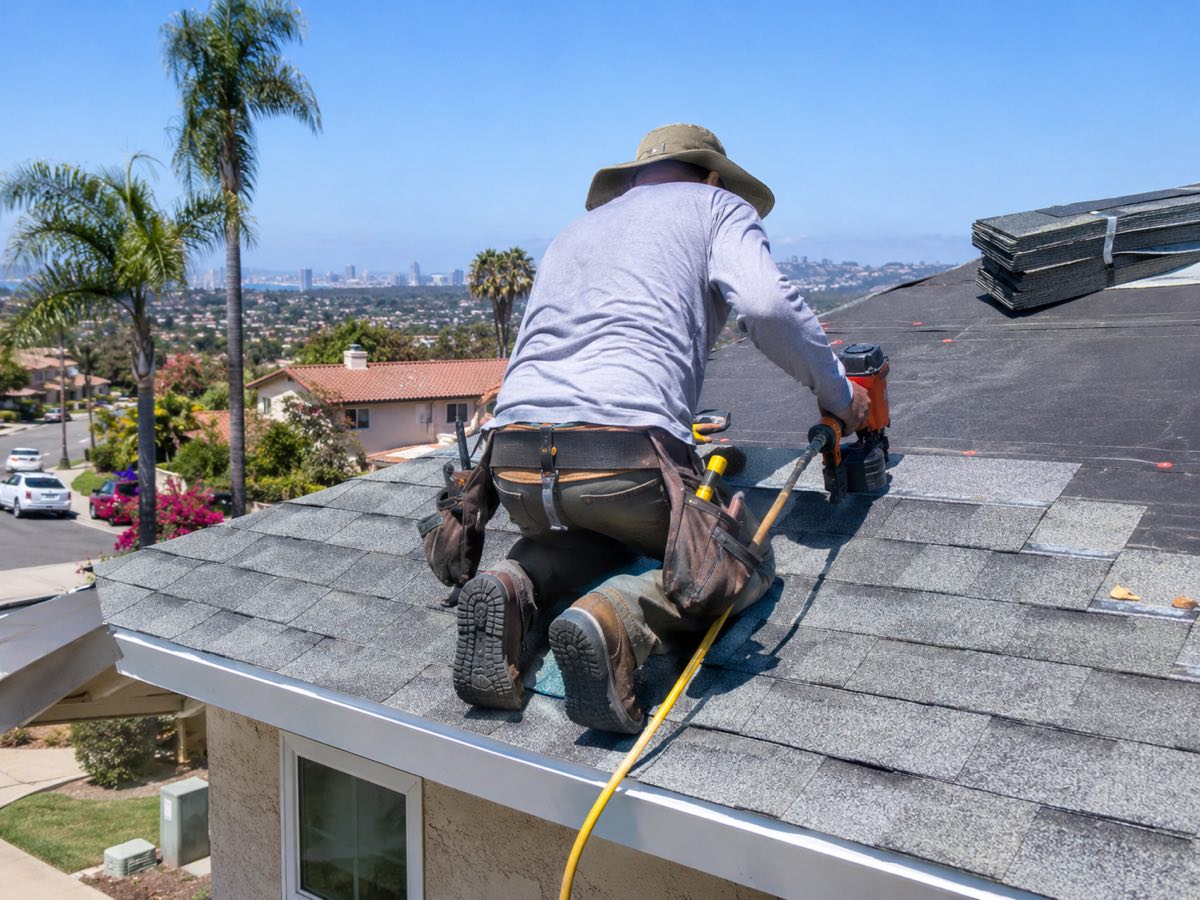
Signs it's time to replace
- Shingle roofs: curling, cracking and heavy granule loss across most slopes, or a roof past 20 to 25 years with repeated leaks
- Tile roofs: tiles widely broken or deteriorated, not just old underlayment
- Flat roofs: cracks, blisters and wet insulation across most of the surface
- Any roof: rotted deck in many areas, sagging, or two layers of roofing that now need work
How long roofs last
| Roof material | Typical life (InterNACHI) |
|---|---|
| Architectural asphalt shingles | 30 years |
| Modified bitumen (torch-down) | 20 years |
| Built-up roofing | 30 years |
| Metal | 40 to 80 years |
| Clay tile | 100+ years |
| Concrete tile | 100+ years |
In San Diego's strong sun, shingles often wear sooner than these figures. Tile lasts, but the underlayment beneath it wears out decades earlier. See our roof lifespan guide.
Choosing a replacement roof
| Option | Strengths | Considerations |
|---|---|---|
| Asphalt shingle | Lower cost, many colors, light | Shorter life in strong sun |
| Concrete tile | Long life, fire resistant | Heavy; switching from shingle needs structural review |
| Clay tile | Very long life, classic Spanish look | Heaviest, higher cost |
| Metal | Long life, light, fire resistant | Higher cost, salt-air considerations near the coast |
| Flat roof membranes | For low-slope roofs | Choice depends on use, traffic and drainage |
San Diego rules that apply to replacement
- Class A fire rating. The City of San Diego requires Class A roofing for new roofs and replacements.
- Layers. Roofs that already have two layers must be torn off to the deck.
- Weight. Switching from shingles or wood to roofing heavier than 6 pounds per square foot needs a permit with structural review.
- Historic homes. Designated historic properties always need a permit for roof covering work.
- Energy code. Replacing a roof can trigger California Title 24 cool-roof requirements for some roofs.
Read the full roof permit guide.
The replacement process
- Inspection and written proposal with material options and prices.
- Permits and HOA approval where required.
- Tear-off of old roofing down to the deck.
- Deck repair of any rotted sheathing.
- New underlayment, flashing and ventilation.
- New roof covering installed to the manufacturer's specifications.
- Final inspection, clean-up and warranty paperwork.
How much does roof replacement cost?
Replacement costs many times more than a repair, and the price depends on roof size, pitch, material, tear-off layers and deck condition. We give a written, itemized proposal after inspection. Compare it against repair costs in San Diego before deciding.
Repair first: what we check before recommending replacement
- Is the problem in one area or everywhere? Leaks in one place are almost always repairs.
- On tile roofs, are the tiles sound? If yes, a lift and relay usually beats a new roof.
- How much life do the shingles or membrane have? We check granules, flexibility, cracking and seams.
- Is the deck sound? Widespread rot changes the math.
- What would repairs cost over the next five years? We compare that with replacement.
You'll see photos supporting whatever we recommend.
Planning a replacement
- Timing: dry months, from spring through early fall, are easiest. Winter work happens between storms.
- HOA approval: many associations require approval of materials and colors.
- Solar: panels must be removed and reinstalled by a solar contractor, with an electrical permit to reinstall in the City of San Diego.
- Gutters and skylights: replacing them at the same time often costs less than doing them later.
- Ventilation: a new roof is the right time to correct attic ventilation.
What happens to the old roof
Old roofing is removed and hauled away. Clean, recyclable materials, such as some asphalt shingles and metal, can go to recycling facilities where available. Tile in good condition can sometimes be salvaged for other homes' repairs.
Related pages
Roof replacement questions
Can a new roof go over my old roof?
California limits roofs to two layers, and many roofers recommend a full tear-off so the deck can be inspected and repaired. If you already have two layers, they must both come off.
How long does a roof replacement take?
Most homes take a few days, depending on size, material and weather. Tile roofs take longer than shingle.
Do I need to move out during replacement?
No. It's noisy, and dust can fall in the attic, but most homeowners stay in the house.
Will my insurance pay for a new roof?
Only when covered damage, such as a storm, makes replacement necessary. Wear and tear isn't covered.
How do I know if I really need a new roof?
Ask for photos showing failure across the roof, not just one area. If a roofer can't show you why repair won't work, get a second opinion.