What is chimney flashing?
Chimney flashing is the set of metal pieces that seal the joint between a chimney and the roof, so water runs past the chimney instead of into the house. Brick, stone or stucco chimneys move differently from the roof, so this joint needs layered flashing rather than a single seal.
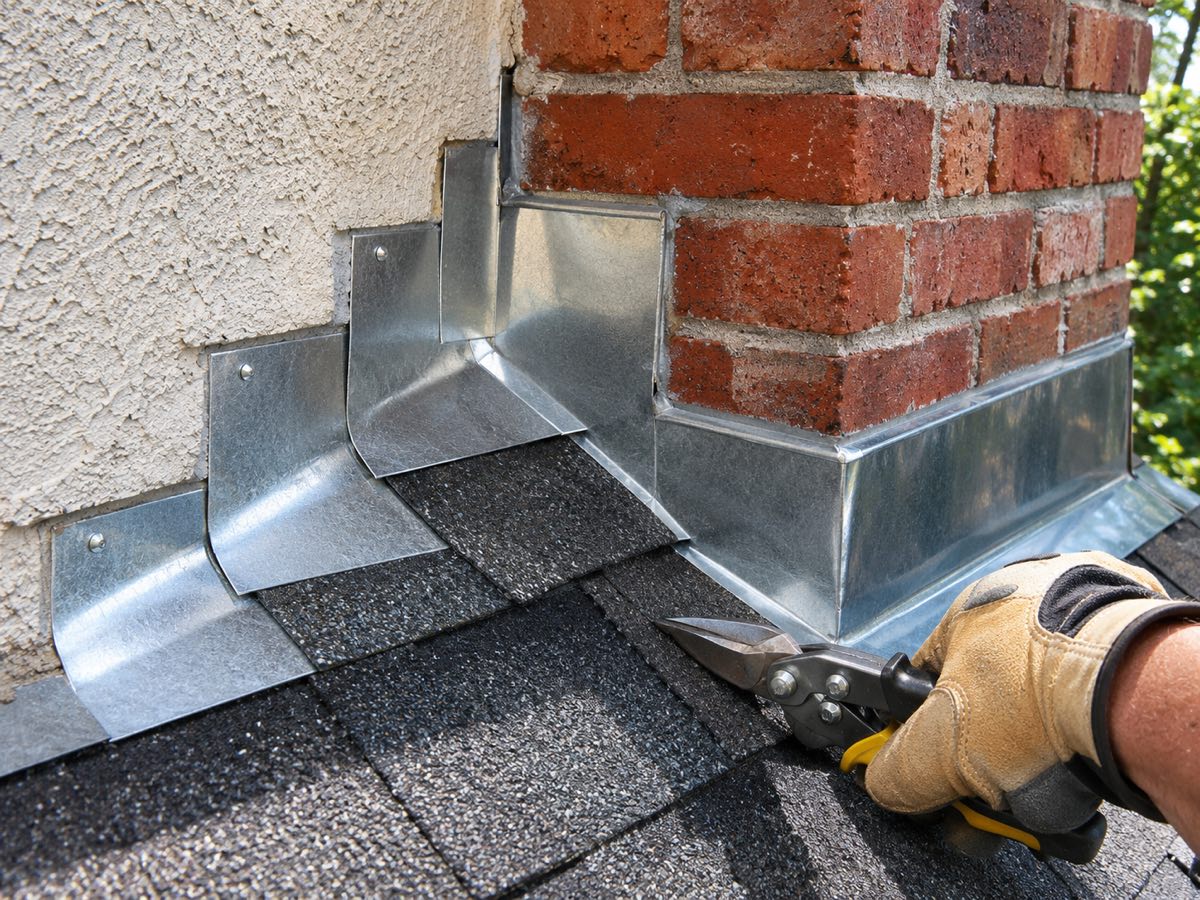
Parts of chimney flashing
| Part | Where it is | What it does |
|---|---|---|
| Step flashing | Along the sides, woven into the roofing | Sheds water down each row of shingles or tiles |
| Counter flashing | Set into or against the chimney, over the step flashing | Covers the top edge of the step flashing |
| Apron (front) flashing | Across the downhill face | Directs water onto the roof below |
| Back pan or cricket | On the uphill side | Diverts water around the chimney |
Why chimney flashing leaks
- Rust on old steel flashing.
- Counter flashing pulled out of the mortar joints, or sealed only with caulk that has cracked.
- No cricket on a wide chimney, so water and debris pile up on the uphill side.
- Cracked mortar or stucco above the flashing, letting water run behind it.
- Roofing replaced without new flashing, reusing pieces that were already worn.
Crickets on wide chimneys
A cricket, or saddle, is a small peaked structure built on the uphill side of a chimney. It splits the water flowing down the roof and sends it around the chimney. Building codes generally require one on chimneys wider than 30 inches. Without it, water and leaves dam up behind the chimney, which is one of the most common chimney leak points we find.
Is it the flashing or the chimney?
Chimney leaks have several possible sources. We check them all before quoting:
- Flashing: stains on the ceiling or wall beside the chimney, worse in wind-driven rain.
- Crown: the concrete cap on top of the chimney cracks and lets water into the masonry.
- Chimney cap: without a cap, rain falls straight down the flue.
- Masonry: porous brick or cracked mortar soaks up water, showing as damp brick in the attic or white deposits.
- Chase cover: on framed chimneys (common on newer homes), a rusted metal top lets water in.
We repair roof-side problems. For masonry or flue work, we work with a chimney specialist.
How we repair chimney flashing
- Remove roofing around the chimney so all the old flashing is exposed.
- Replace step flashing, one piece per course, woven into the roofing.
- Install new counter flashing, cut into the mortar joints or set in a reglet, not just glued on.
- Install or rebuild the cricket on wide chimneys.
- Install the apron on the downhill side.
- Reinstall tiles or shingles and check the crown and cap.
Chimney flashing on tile roofs
On tile, the chimney is surrounded by larger flashing pans under the tiles, with tiles cut to fit. These pans rust out of sight. A repair means lifting the tiles around the chimney, replacing the pans and flashing, and resetting the tiles. See tile roof repair.
How much does chimney flashing repair cost?
Chimney flashing replacement typically costs $900 to $2,400 in San Diego, and more if masonry repair or a new cricket is needed. See the roof repair price guide.
Chimneys on San Diego homes
Chimneys here range from brick and stone chimneys on homes from the early 1900s, common in North Park, Golden Hill and Mission Hills, to framed chimneys with metal flues and stucco or siding on newer homes. Brick chimneys usually have flashing set into the mortar joints; framed chimneys use flashing integrated with the wall material, plus a metal chase cover on top. Each type leaks differently, and each needs flashing that suits its construction.
Signs of chimney flashing failure
| Sign | Where to look |
|---|---|
| Ceiling or wall stain beside the chimney | Inside, near the fireplace |
| Damp wood or stains around the chimney in the attic | Attic, around the chimney |
| Rusted or loose metal at the chimney base | Outside, from the ground with zoom |
| Thick layers of old caulk at the chimney | Outside; sign of past patches |
| Debris piled on the uphill side | Outside; missing or small cricket |
Caring for chimney flashing
- Clear leaves from behind the chimney before the rainy season.
- Check the crown and cap once a year.
- Replace counter flashing that pulls out of the mortar joints.
- Avoid caulk-only patches, which hide the real problem.
- Repoint cracked mortar above the roof line to stop water running behind the flashing.
Related repairs
Chimney flashing questions
Can chimney flashing be repaired without replacing it?
Small gaps in counter flashing can be resealed, but rusted or missing step flashing needs replacing. Sealant over failed flashing usually fails within a few seasons.
Why does my chimney leak only in some storms?
Storms that drive rain against the side or uphill face of the chimney push water past weak flashing. Calm rain may run past without leaking.
Should I remove an unused chimney?
Some owners remove unused chimneys below the roof line and roof over the opening, which ends chimney leaks for good. It involves structural work and a permit, so it's a bigger project than a flashing repair.
Does a chimney leak mean my chimney is unsafe?
Not necessarily, but water damages masonry and flues over time. If you see cracked brick or a damaged crown, have a chimney specialist check it.
How long does chimney flashing repair take?
Most chimney flashing repairs take one day. Adding a cricket or working on a tile roof can take longer.
Do I need a permit for chimney flashing?
Flashing repair alone usually doesn't need a permit. Rebuilding or removing a chimney is structural work that does.