What is tile roof repair?
Tile roof repair is replacing broken or slipped tiles and fixing the underlayment, flashing and fasteners beneath them, without replacing the whole roof. Clay and concrete tiles are durable, so most tile repairs focus on what's under them.
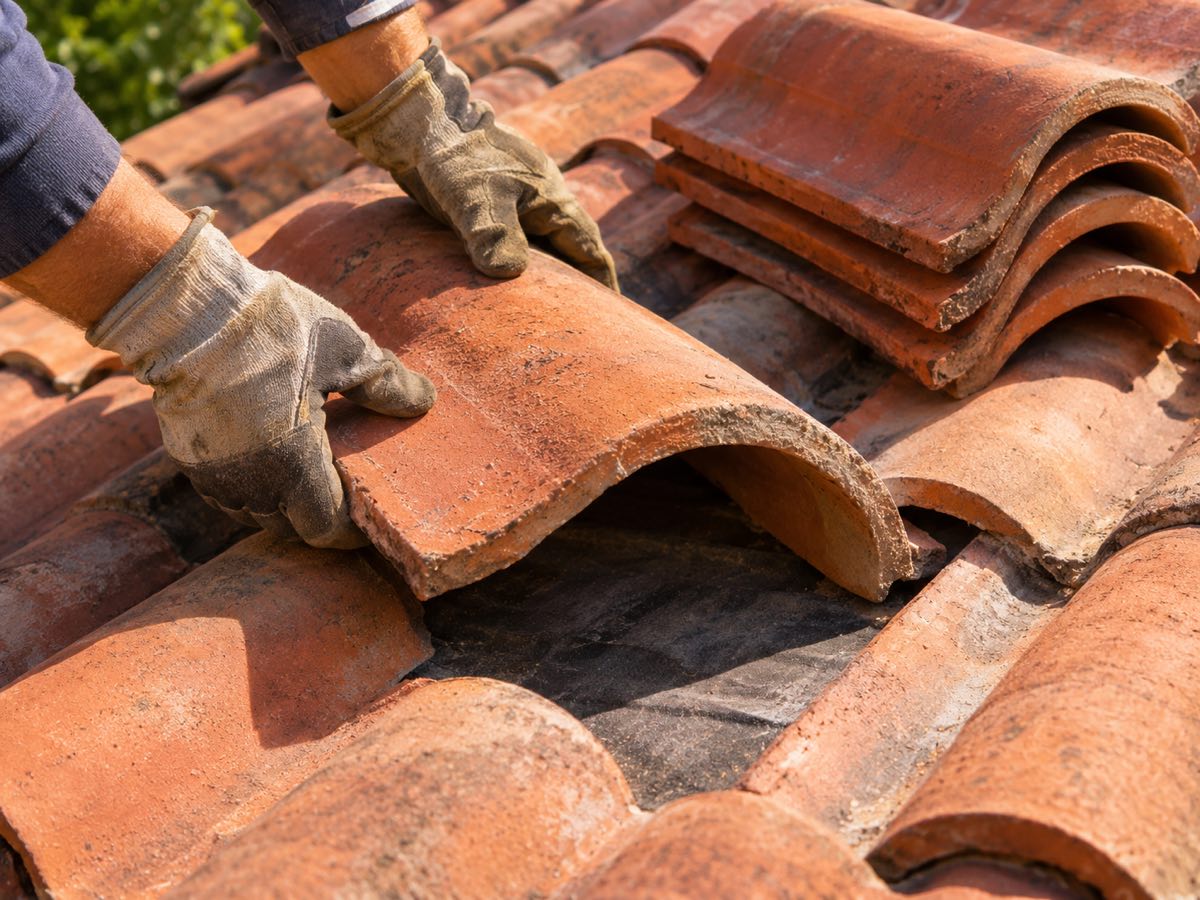
Why tile roofs leak when the tiles look fine
Tiles shed most of the rain, but water still gets between and under them, especially in wind-driven storms. The underlayment, a layer of felt or synthetic sheet on the roof deck, carries that water down to the eaves.
Underlayment wears out long before the tiles do. Sun heat under the tiles dries the felt until it cracks and tears. When it fails, water reaches the roof deck and your ceiling. This is the most common cause of leaks we find on older San Diego tile roofs.
Clay tile vs concrete tile
| Clay tile | Concrete tile | |
|---|---|---|
| Common profiles | Spanish "S", two-piece barrel (mission) | Flat, "S" profile, low barrel |
| Weight | Heavy | Heavier than most clay |
| Typical repair issues | Brittle, cracks underfoot, hard to match old colors | Surface wear, cracks, some older profiles discontinued |
| Where we see it | Older Spanish Revival homes, Mission Hills, Point Loma | Tract homes from the 1970s on, Rancho Bernardo, Mira Mesa |
Both are fire resistant and both depend on good underlayment to stay watertight.
Parts of a tile roof
Knowing the parts helps you understand any quote you receive.
| Part | What it does | What goes wrong |
|---|---|---|
| Field tiles | Shed most of the rain across the roof | Cracks, chips, slipping |
| Underlayment | Waterproof layer on the roof deck, under the tiles | Dries out, tears, wears through at nail holes |
| Battens | Wood or plastic strips that hold tiles on some roofs | Rot, loose fasteners |
| Roof deck | Plywood or boards the roof is built on | Dry rot where water has reached it |
| Ridge and hip tiles | Cap the peaks where slopes meet | Loose tiles, cracked mortar, failed fasteners |
| Valley flashing | Metal channel where two slopes meet | Rust, debris dams, gaps under tiles |
| Bird stops and eave closures | Close the open ends of tiles at the eaves | Missing, letting in birds, debris and embers |
| Fasteners | Nails, clips or wires that hold tiles | Rust and loosen over time |
Tile roof leak points, ranked
In our experience, these are the places tile roofs leak, from most to least common:
- Worn underlayment across a slope, often near the eaves where water collects.
- Valley flashing that has rusted or is clogged with leaves.
- Wall and chimney flashing where the roof meets stucco or masonry.
- Broken tiles from foot traffic, especially around solar panels and AC units.
- Ridge and hip tiles that have shifted.
- Vent pipes whose flashing or boot has failed under the tiles.
How we inspect a tile roof
Walking a tile roof the wrong way causes the breaks we're called to fix, so we step only on the lower overlap of each tile or use walk pads. We check from the attic first when a leak is active, then lift tiles in the suspected area to see the underlayment. You get photos of what's under the tiles, not just what's on top.
Repair, section relay or full relay?
| Situation | Usual fix |
|---|---|
| A few broken or slipped tiles, underlayment sound | Replace or reset tiles |
| Leak in one area, underlayment failed in that area | Section lift and relay |
| Leaks in several areas, underlayment brittle across the roof | Full lift and relay |
| Tiles themselves widely broken or deteriorated | Discuss new tile or other roofing |
Most San Diego tile roofs we see fall into the first two rows.
Common tile roof repairs
- Broken and cracked tiles: we replace them with matching tiles. See broken roof tile replacement.
- Slipped or displaced tiles: we reset and re-fasten tiles moved by wind, settling or foot traffic.
- Worn underlayment: we lift the tiles in the affected area, install new underlayment and relay the same tiles. See lift and relay.
- Ridge and hip repairs: we re-set loose ridge tiles and repair cracked mortar or failed ridge fasteners.
- Flashing: we replace rusted or failed flashing at walls, chimneys and valleys. See roof flashing repair.
Matching old or discontinued tiles
Matching is the hardest part of many tile repairs. Some older tile profiles and colors are no longer made. We match from current stock first, then from salvaged tiles. When no match exists, we can move original tiles from a less visible area to the repair spot and use the closest match where it won't be seen.
Fire safety on tile roofs
Clay and concrete tile roofs are rated Class A for fire resistance when installed as a tested system. Gaps at the eaves and ridge can let embers in, so we close open ends with bird stops and eave closures during repairs. This matters in canyon-edge neighborhoods such as Scripps Ranch and Rancho Bernardo.
How much does tile roof repair cost?
Tile repairs usually cost more than shingle repairs because tiles must be lifted, matched and reset by hand. HomeAdvisor reports an average of $1,688 for tile roof repair in San Diego. See price ranges by job in our roof repair cost guide.
Tile roofs and solar panels
Many San Diego tile roofs now carry solar panels. Installing them means cutting or replacing tiles around each mount and walking across the roof. Cracked tiles and poorly flashed mounts are a common source of leaks on these roofs. If your tile roof is older, have the underlayment checked before panels go on, so they don't have to be removed later. See leaks around solar mounts.
Maintaining a tile roof
- Clear valleys and gutters before the rainy season. Debris dams water and pushes it under tiles.
- Keep bird stops in place so birds don't nest under the eave tiles.
- Limit foot traffic. Ask any contractor how they'll protect your tiles.
- Replace cracked tiles promptly before the underlayment below them weakens.
- Inspect every few years on roofs with original underlayment.
Should you walk on a tile roof?
No. Tiles crack under foot pressure, especially clay. Many of the broken tiles we replace were cracked by people servicing solar panels, satellite dishes or AC units. Roofers step only on specific points of each tile.
Ridge and hip repairs
Ridges and hips cap the peaks of the roof. On older roofs, ridge tiles were often set in mortar; newer methods fasten them to a ridge board with clips or screws. Cracked mortar and rusted fasteners let ridge tiles loosen, and wind can move them. We re-set loose ridge tiles and use the fastening method that suits your roof.
Questions to ask a tile roofer
- Do you check the underlayment under the tiles, and will you show me photos?
- How do you walk on the roof without breaking tiles?
- Where will replacement tiles come from, and how close will the match be?
- Will you repair just the failed area, or is a section lift and relay needed, and why?
- What underlayment do you use, and is the warranty in writing?
Tile roofs and roof age
Many tile roofs in San Diego were installed decades ago, with felt underlayment that is now reaching the end of its life. Homes built from the 1970s through the 1990s, common in Mira Mesa, Rancho Peñasquitos, Rancho Bernardo and Scripps Ranch, are where we see underlayment failures most often. If your home is in that age range and has its original roof, an inspection before the rainy season is worth it.
Tile roof repair in your neighborhood
Tile repairs are common across the city, from Spanish Revival homes in Mission Hills to tract homes in Mira Mesa. See all San Diego service areas for local roof notes.
Other roof types
Have a different roof? See shingle roof repair or flat roof repair.
Clay and concrete tile pages
Where we do this work
We do this repair across San Diego. It's especially common in roof repair in Downtown and Uptown, roof repair in Point Loma and Ocean Beach, roof repair in San Carlos, Del Cerro and Tierrasanta. See all neighborhoods we serve.
Tile roof repair questions
How long does tile roof underlayment last?
It depends on the material and how it was installed. Older felt underlayment often fails well before the tiles, while modern synthetic underlayment lasts longer. An inspection shows the condition of yours.
Can you replace just a few tiles?
Yes. Replacing a few broken tiles is one of the most common repairs we do.
Do I need to replace my tile roof if it leaks?
Usually not. Most leaks are fixed by replacing tiles or renewing underlayment in one area. A full lift and relay reuses your existing tiles, which costs less than a new tile roof.
Are clay tiles better than concrete tiles?
It depends on what matters to you. Clay holds its color and suits Spanish-style homes; concrete costs less and comes in more profiles. Both last a long time and both need good underlayment.
Why are there tiles missing at the edge of my roof?
Wind and settling can loosen edge and ridge tiles, especially when fasteners rust. Missing edge tiles expose the underlayment to sun and should be replaced before the next storm.
Can leaves and debris cause a tile roof leak?
Yes. Leaves and debris in valleys and between tiles slow drainage and push water sideways under the tiles. Clearing them before winter prevents many leaks.
Can a tile roof be repaired in the rainy season?
Yes, between storms. We open only as much roof as we can close the same day, and tarp the area if weather turns.
Does a tile roof need maintenance?
Yes, light maintenance: clearing debris from valleys and gutters, replacing cracked tiles, keeping bird stops in place and checking flashing. It costs little and prevents most leaks.
What is the difference between a re-roof and a lift and relay?
A re-roof replaces the roof covering with new material. A lift and relay keeps your tiles and replaces only the underlayment and flashing beneath them.
Why do tile roofs leak at the eaves?
Water collects at the bottom edge of the roof, where underlayment wears fastest and debris builds up. Eave leaks often show as stains on exterior walls or soffits.