What is clay tile roof repair?
Clay tile roof repair is replacing cracked or slipped clay tiles and fixing the underlayment, flashing, mortar and fasteners under and around them. Fired clay tiles are among the longest-lasting roofing materials. InterNACHI rates clay tile at 100 years or more, so most clay roofs are repaired many times and rarely replaced.
In San Diego, clay tile is the signature roof of Spanish Revival and Mission-style homes, especially those built in the 1920s and 1930s in neighborhoods like Mission Hills, Kensington and Point Loma.
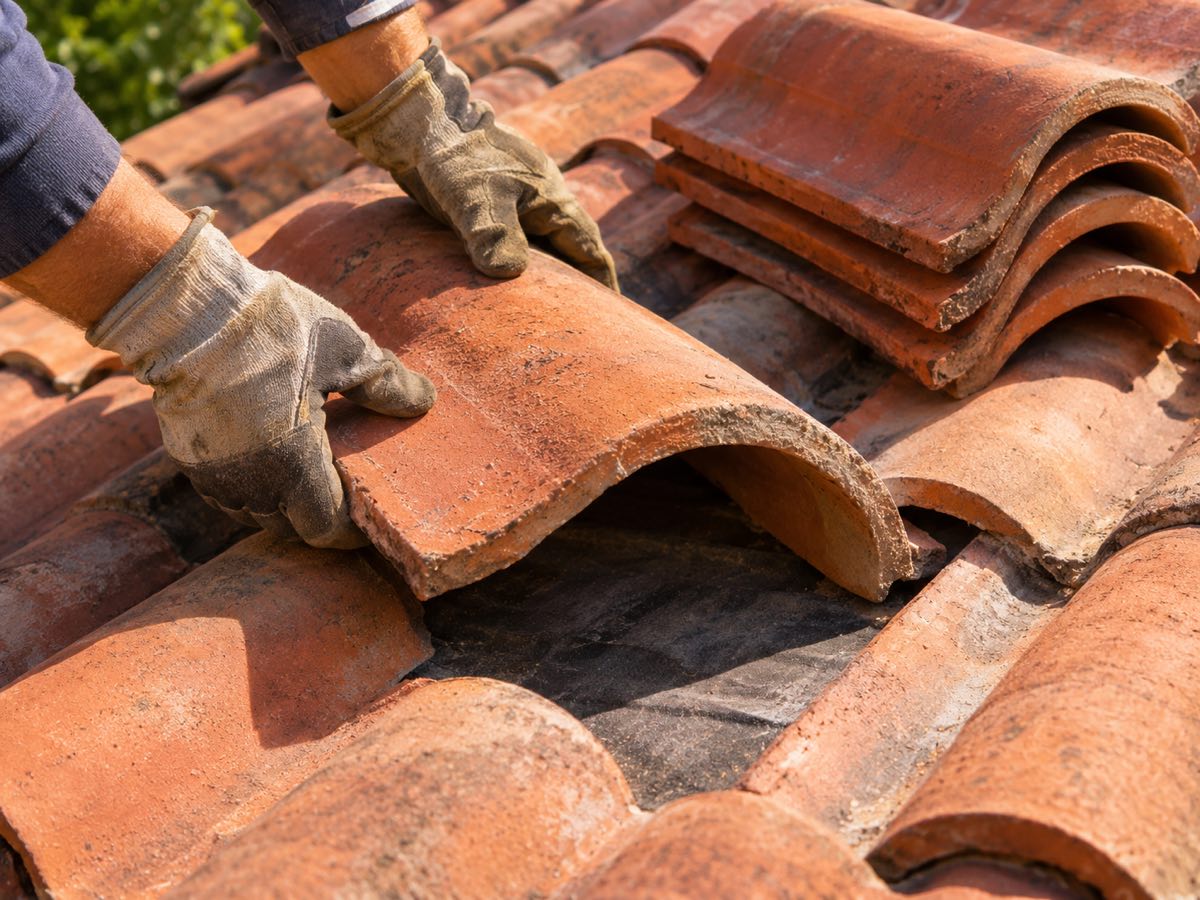
Clay tile profiles we repair
| Profile | How it's built | What to know |
|---|---|---|
| Two-piece barrel (mission) | Curved pan tiles laid concave-up, cover tiles laid over the joints | The traditional look; more pieces, more joints |
| One-piece Spanish "S" | Single S-shaped tile combining pan and cover | Common on Spanish-style homes of many eras |
| Flat or shingle clay | Flat interlocking clay tile | Less common in San Diego |
Two-piece barrel roofs often have mortar at the ridge, hips and eaves, and sometimes "boosted" tiles at the edges for a thicker look. Each of these details needs its own repair method.
Why clay tile roofs leak
- Underlayment failure. Clay tiles last far longer than the felt under them. On older roofs, that felt is often the original and has dried out.
- Cracked tiles. Clay is hard but brittle. Foot traffic, falling branches and age crack it.
- Slipped tiles. Rusted nails or wires let tiles slide out of position, opening gaps.
- Failed mortar. Mortar at ridges and hips cracks with time and lets water and pests in.
- Flashing. Valleys, chimneys and walls under clay tile rust where you can't see them.
Matching old clay tile
Clay color comes from the clay and the firing, so no two batches match exactly, and many historic colors and blends are no longer made. Our matching approach:
- Current production first, when your profile and color are still made.
- Salvaged clay tile from roofs that were removed, which has the same age and weathering.
- Borrowing from hidden areas. We move original tiles from a rear or low-visibility slope to the visible repair, and put the closest match where it won't be seen.
On historic homes, keeping original tile visible is usually the goal, and it's often required. See our roof permit guide for historic district rules.
How we work on a clay roof
Clay tile breaks under the wrong step. We walk only where tiles are supported, use walk pads, and lift tiles by hand rather than prying. Mortared ridges are opened carefully and rebuilt with mortar or a mechanical ridge system, depending on what the roof was built with and what you want.
Common clay tile repairs
- Replace cracked and broken tiles with matched clay. See broken roof tile replacement.
- Reset slipped tiles and replace rusted fasteners with corrosion-resistant ones.
- Repair ridge and hip mortar or convert to a mechanically fastened ridge.
- Replace underlayment under a section or the whole roof, reusing the tiles. See lift and relay.
- Replace hidden flashing at valleys, walls and chimneys.
- Close eave openings with bird stops so birds and embers can't get in.
Clay tile and fire safety
Clay tile roofs can be rated Class A for fire resistance as a tested system. The City of San Diego requires Class A roofing for all repairs. Open tile ends at eaves and ridges can let wind-blown embers in during a wildfire, so we close them during repairs.
How much does clay tile repair cost?
Clay tile repairs usually cost more than concrete tile repairs because clay is more fragile, slower to handle and harder to match. Underlayment replacement under clay tile is priced by area, plus replacement tiles for those that break. See ranges in the San Diego roof repair price guide.
Repair or replace a clay tile roof?
Clay tile itself rarely needs replacing. When the underlayment has failed across the roof, a lift and relay renews the waterproofing and keeps your tile. Full replacement with new tile only makes sense when the tiles are widely broken or deteriorated, which is uncommon. Read repair or replace your roof.
Clay tile on historic San Diego homes
Many of San Diego's clay roofs sit on homes that are designated historic or inside historic districts, including parts of Mission Hills, Kensington and North Park. On those homes, the goal of a repair is to keep the original look: the same profile, color, eave treatment and ridge style. We document the existing details with photos before work starts, reuse original tiles wherever possible, and put any new or salvaged tiles where they're least visible. When a permit is required, we follow the City's process, including historic review when it applies.
Signs your clay roof needs attention
| What you see | What it usually means |
|---|---|
| Cracked or missing tiles visible from the street | Foot traffic, impact or age |
| Tile fragments in gutters | Tiles breaking on the roof |
| Cracked mortar at ridges and hips | Ridge tiles may loosen in wind |
| Birds going in and out at the eaves | Missing bird stops, open tile ends |
| Leaks in winter storms with no visible damage | Worn underlayment |
| Stains near chimneys or walls | Hidden flashing failure |
Caring for a clay tile roof
- Keep people off it. Most broken clay tiles are cracked by someone walking on the roof.
- Clear valleys and gutters before the rainy season.
- Keep bird stops in place at the eaves.
- Replace cracked tiles promptly so the underlayment beneath stays protected.
- Have the underlayment checked on roofs that are decades old, even if they haven't leaked yet.
- Keep a few spare tiles from your roof for future repairs.
Related tile pages
Clay tile questions
How long do clay tile roofs last?
The tiles can last 100 years or more, but the underlayment beneath them wears out much sooner. That's why clay roofs need underlayment work long before the tiles do.
Can I walk on my clay tile roof?
No. Clay tiles crack under foot pressure, even when they look solid. Leave roof access to roofers who know where to step.
Why is there mortar on my clay roof?
Mortar was traditionally used to bed ridge, hip and eave tiles on barrel roofs. When it cracks, tiles loosen and water and pests get in, so cracked mortar should be repaired.
Can you add new clay tiles that look old?
We use salvaged tiles where possible, because new tiles look brighter at first. New tiles weather over time, and placing them in less visible areas keeps the roof looking even.
Is my roof clay or concrete?
Clay tiles are usually thinner, with a fired, uniform color through the tile; concrete tiles are thicker and heavier, with color on or near the surface. A broken edge shows the difference clearly. We can tell from a photo or a quick look.
Can clay tile be reused in a lift and relay?
Yes. That's the main advantage of a lift and relay: your original clay tiles go back on over new underlayment, with broken pieces replaced.