What is storm damage roof repair?
Storm damage roof repair is fixing roof damage caused by a specific weather event, such as wind, heavy rain or falling debris. Because the damage is sudden, it's often covered by homeowners insurance, unlike normal wear.
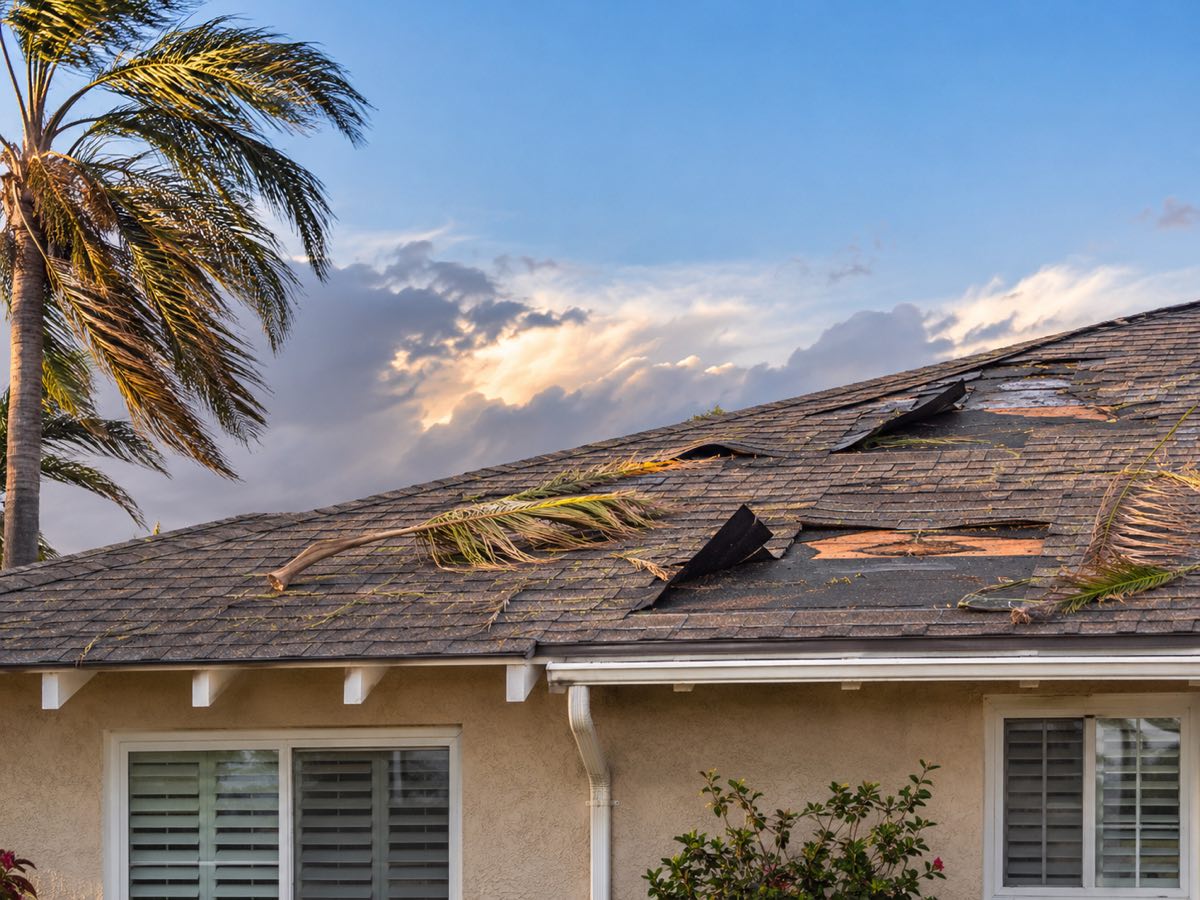
San Diego storm and wind risks
- Winter storms, mostly from December to March, bring heavy rain and gusty wind.
- Santa Ana winds, usually in fall and winter, blow hard and dry from the east and can lift shingles and tiles, especially on ridges and edges.
- Falling branches from eucalyptus and other tall trees during wind events.
Signs of storm damage
- Missing or lifted shingles, or shingles lying in the yard
- Tiles that have slipped, cracked or blown off, especially along ridges
- Bent or loose flashing and gutters
- Branches or debris on the roof
- New leaks after a storm
Look from the ground or use binoculars. Don't climb on a storm-damaged roof.
How we repair storm damage
- Stop active leaks first. We tarp or temporarily seal open areas. See emergency roof repair.
- Inspect the whole roof, not just the obvious damage.
- Photograph and document each damaged area with a written report.
- Quote the repair so you can compare it with your insurance deductible.
- Repair the damage: replace shingles or tiles, re-secure ridge caps, fix flashing and any damaged deck.
Insurance claims for storm damage
Homeowners policies often cover sudden wind and storm damage, and usually exclude wear and tear and poor maintenance. Each policy is different. To support a claim:
- Photograph damage inside and outside as soon as it's safe.
- Keep receipts for emergency repairs.
- Contact your insurer early.
- Ask us for a written inspection report with photos.
We don't decide what your insurer covers, but clear documentation helps the adjuster see the damage.
Damage by roof type
| Roof type | Typical wind and storm damage |
|---|---|
| Asphalt shingle | Missing shingles, creased or lifted tabs, torn ridge caps, exposed nails |
| Clay and concrete tile | Displaced or blown-off ridge and edge tiles, cracked tiles from debris |
| Flat roofs | Lifted membrane edges, torn flashing at parapets, punctures from debris |
| All roofs | Bent gutters, loose drip edge, damaged vents and flashing |
Shingles that are lifted but not torn off can look normal from the ground, but their seal is broken. The next wind lifts them further. An inspection checks for this. See asphalt shingle repairs and tile roof repairs.
Hidden damage to check for
- Broken seal strips under shingles that look flat
- Cracked tiles hidden under other tiles or under solar panels
- Loosened flashing at walls and chimneys
- Water in the attic from rain driven under roofing
- Damaged roof deck under a punctured area
Wind damage vs wear and tear
Insurers look closely at whether damage came from a storm or from age. Clues that point to a storm include fresh breaks, shingles or tiles found on the ground after a known wind event, damage concentrated on the side facing the wind, and debris impact marks. Clues that point to age include granule loss across the whole roof, brittle shingles everywhere and long-standing rust. Our report describes what we see without guessing at your coverage.
Preparing your roof for storm season
- Clear gutters, valleys and drains before December.
- Trim branches that overhang the roof, especially eucalyptus.
- Re-secure loose ridge tiles and caps found during a fall inspection.
- Fix small issues first: a lifted shingle or cracked tile becomes a leak in wind-driven rain.
- Know who to call: save our number, (619) 555-0100, for emergency storm leak repair.
What the repair process looks like
Most storm repairs take one visit once the roof is dry. Larger jobs, such as replacing a torn section of flat roof or a run of blown-off ridge tiles, can take a day or two. If your insurer is involved, we can wait for the adjuster to see the damage before we repair it, as long as temporary protection is in place.
Documenting storm damage: a photo checklist
- Wide shots of each side of the house showing the roof.
- Close-ups of missing shingles, broken tiles and debris, from the ground or a window.
- Inside damage: ceiling stains, wet insulation, damaged belongings.
- The date and time, and a note of the storm or wind event.
- Receipts for tarps, emergency repairs and drying equipment.
Trees and roof damage
Tall trees near the house, especially eucalyptus, drop limbs in strong wind. Branches rubbing on the roof wear through shingles over time. Have an arborist trim limbs that overhang the roof before the windy season, and keep gutters clear of leaves.
Related repairs
Where we do this work
We do this repair across San Diego. It's especially common in roof repair in Scripps Ranch, roof repair in Southeastern San Diego. See all neighborhoods we serve.
Storm damage questions
How do I know if wind damaged my roof?
Look for missing shingles, shingles or tiles in the yard, and new leaks after the wind. Many wind-lifted shingles look normal from the ground, so an inspection is the reliable check.
Is it worth filing a claim for a small repair?
Compare the repair quote with your deductible. If the repair costs less than the deductible, a claim may not make sense.
How soon should I repair storm damage?
As soon as possible. Small openings let in more water with each storm and can turn a repair into a bigger job.
Can I repair storm damage before the adjuster comes?
Make temporary repairs to stop more damage, and keep photos and receipts. Ask your insurer before making permanent repairs, so the adjuster can see the damage first.
Does a few missing shingles mean I need a new roof?
No. A few missing shingles is a repair. Replacement only comes up when damage is spread across the roof or the roof was near the end of its life anyway.
What wind speed damages a roof?
It depends on the roof's age, condition and how it was installed. Older shingles with weakened seals lift in winds that newer roofs handle easily, and ridge and edge tiles move first.
Does homeowners insurance cover old roofs?
Policies often limit or depreciate coverage on older roofs. Read your policy or ask your agent how roof age affects a claim.