What is concrete tile roof repair?
Concrete tile roof repair is fixing leaks, broken tiles, underlayment and flashing on roofs covered with tiles made from cement, sand and pigment. Concrete tiles are heavy and durable, and many San Diego tract homes from the 1970s onward were built with them.
You'll see concrete tile across Mira Mesa, Rancho Peñasquitos, Rancho Bernardo, Scripps Ranch, Carmel Valley, Tierrasanta and many other neighborhoods.
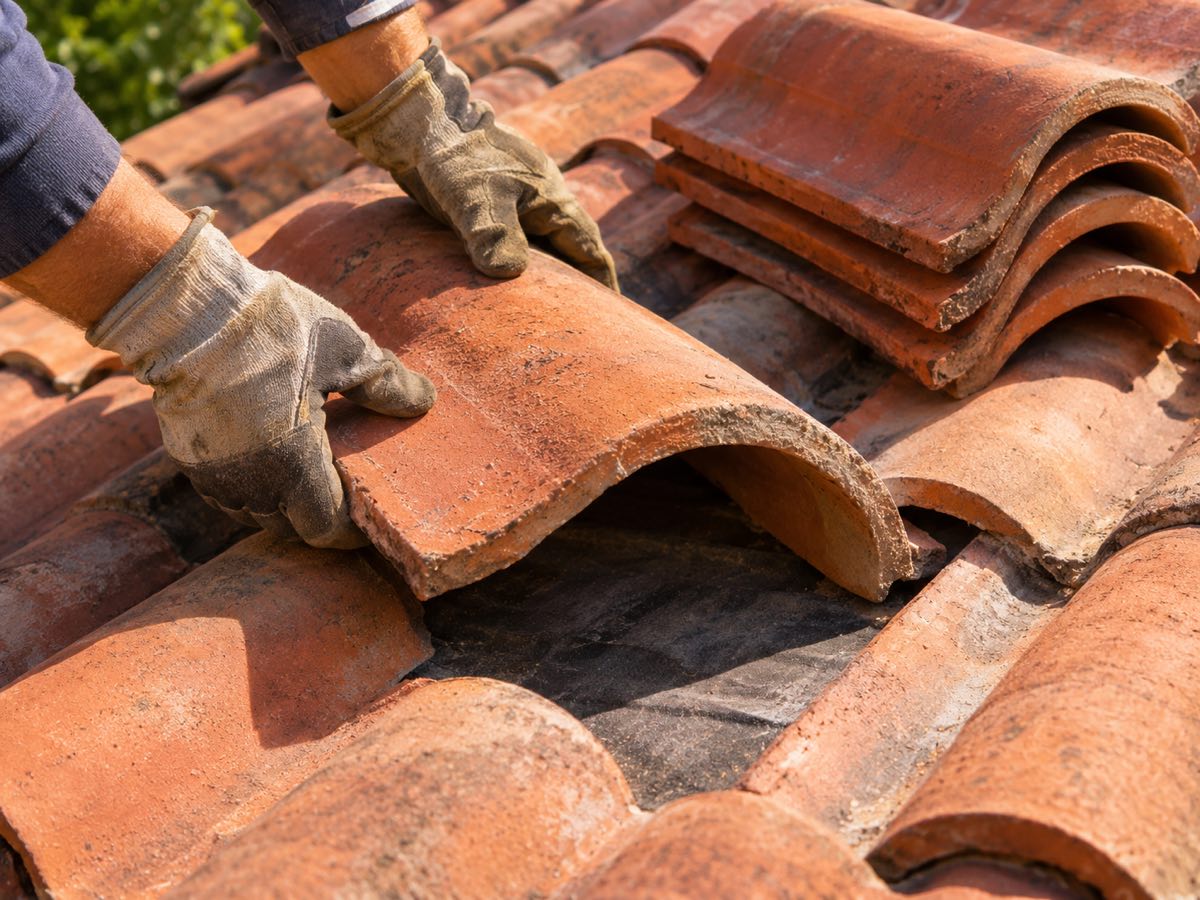
Concrete tile profiles
| Profile | Look | Where it's common |
|---|---|---|
| Flat (shake or slate look) | Flat tile with a textured face | Many tract homes and newer homes |
| Low-profile "S" | Gentle wave | Homes from the 1970s to today |
| High-profile "S" or barrel | Deep curve, Spanish look | Spanish-style homes with concrete instead of clay |
Knowing your profile helps us bring the right tiles on the first visit. A photo of your roof from the street is usually enough to identify it.
Why concrete tile roofs leak
- Underlayment at the end of its life. Many 1970s to 1990s roofs still have their original felt, which dries, cracks and tears under the tiles.
- Broken tiles from foot traffic, especially around solar arrays and AC units.
- Valley flashing clogged with debris or rusted through.
- Tiles cut poorly around vents and solar mounts, leaving gaps.
- Slipped tiles where nails have rusted or battens have rotted.
Surface wear on concrete tile
Concrete tiles are colored with pigment or a surface coating. Over decades, sun and rain wear the surface, fading the color and roughening the texture. Surface wear alone isn't a leak. The tile still sheds water, and the underlayment below decides whether the roof stays dry. Faded tile does make matching harder, so we often move weathered originals to visible spots and put new tiles where they won't show.
Discontinued concrete tile profiles
Some profiles and colors from the 1970s and 1980s are no longer made. When a match isn't available new, we check salvage sources, or borrow originals from hidden slopes. For large repairs on roofs with a discontinued tile, we'll talk through the options before you commit, including how visible a near-match will be.
Concrete tile and roof weight
Concrete tile is one of the heaviest common roof coverings. In the City of San Diego, replacing shingles or wood with roofing heavier than 6 pounds per square foot requires a permit with structural review. That matters if you're considering a switch to tile. For repairs on an existing tile roof, the structure was built for the weight already. See the roof permit guide.
Common concrete tile repairs
- Broken roof tile replacement
- Lift and relay with new underlayment
- Valley and wall flashing replacement under tile
- Re-fastening slipped tiles and ridge tiles
- Re-flashing around solar mounts and vent pipes
How much does concrete tile repair cost?
Concrete tile repairs usually cost less than clay tile repairs but more than shingle repairs. The tiles are tough but heavy, so lifting and resetting them takes time. See typical ranges in the roof repair price guide.
Repair, lift and relay or replace?
| Situation | Usual fix |
|---|---|
| A few broken tiles, sound underlayment | Replace tiles |
| Leak in one area, underlayment failed there | Section lift and relay |
| Brittle underlayment across the roof, tiles in good shape | Full lift and relay |
| Tiles widely deteriorated or broken | Discuss new roofing |
Most concrete tile roofs we see belong in the first three rows.
Concrete tile roofs and solar panels
Concrete tile roofs are common in neighborhoods where solar is popular, such as Mira Mesa, Rancho Peñasquitos and Carmel Valley. Mounting panels on concrete tile means replacing or cutting tiles at each mount and walking across the roof. When it's done well, the roof stays dry. When it isn't, cracked tiles and poorly flashed mounts cause leaks under the array, sometimes years later. Before solar goes on an older concrete tile roof, have the underlayment checked, because removing and reinstalling panels later adds cost. See leak repair around solar panels.
What a concrete tile inspection covers
- Walk the roof carefully on the supported part of each tile.
- Check valleys, ridges and hips for debris, rust and loose tiles.
- Lift tiles in representative spots to see the underlayment's condition.
- Check flashing at walls, chimneys, skylights and vents.
- Inspect around solar mounts and rooftop equipment.
- Look in the attic for stains, daylight and dry rot.
- Photograph everything and give you a written price for each item.
Matching tips for owners
Keep any spare tiles left from construction or earlier repairs, stored flat in a dry place. Note the tile manufacturer and profile if you find them on paperwork or stamped on the back of a spare tile. That information makes matching faster, especially for discontinued colors.
Related tile pages
Concrete tile questions
How long do concrete tile roofs last?
Concrete tiles can last many decades; InterNACHI rates them at 100 years or more. The underlayment under them wears out much sooner, so expect underlayment work during the roof's life.
Is concrete tile better than clay?
It depends on your priorities. Concrete costs less and comes in more profiles; clay holds its color longer and suits historic Spanish homes. Both depend on good underlayment.
Can concrete tiles be painted or sealed?
Coatings made for concrete tile can refresh the color, but they don't fix leaks. Leaks come from the underlayment and flashing below.
Do concrete tiles break easily?
They're stronger than clay but crack at corners and edges under foot traffic or impact. Ask anyone servicing your roof how they'll protect the tiles.
Why do my concrete tiles look faded?
Sun and rain wear the color off the surface over decades. Fading is cosmetic; the tile still sheds water as long as it isn't cracked.
How long does a concrete tile repair take?
Replacing a few tiles takes a few hours. A section lift and relay takes one to two days, and a full roof several days, depending on size and weather.