What is a lift and relay?
A lift and relay is a tile roof repair where roofers remove the tiles, replace the underlayment underneath, and reinstall the same tiles. Broken tiles are replaced as the work goes. Some roofers call it a re-felt.
It can cover one section of the roof or the whole roof.
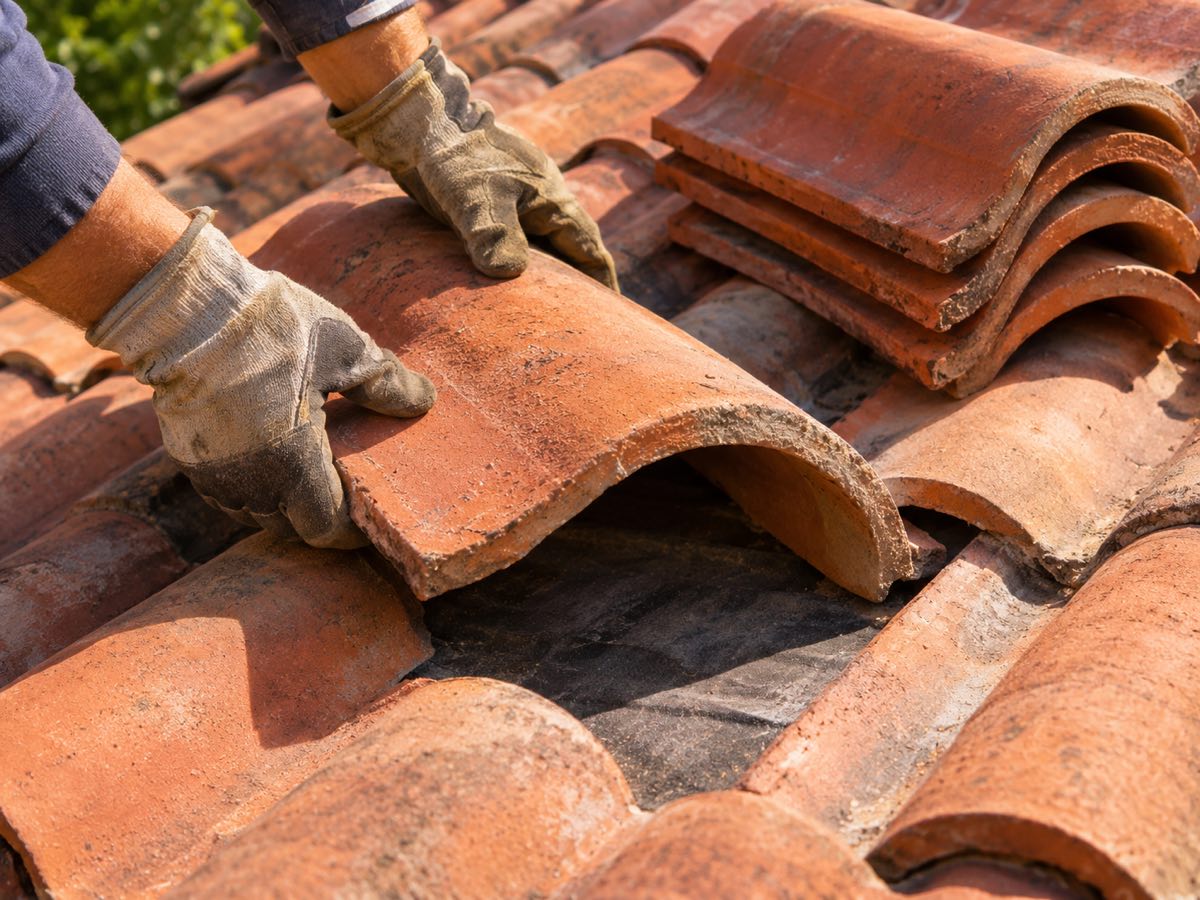
Why tile roof underlayment fails
Tiles shade the underlayment from direct sun, but heat builds up under them. Over years, older felt underlayment dries out, turns brittle and tears. Nail holes widen. Water that slips past the tiles then reaches the roof deck.
This is why a tile roof that looks fine from the street can leak in every winter storm.
Signs you need underlayment replacement
- Leaks in several spots, or leaks that return after tiles are replaced
- Brittle, torn or crumbling felt visible when a tile is lifted
- Water stains on the roof deck seen from the attic
- Dry rot in the roof deck near the eaves
How we do a lift and relay
- Remove and stack the tiles on the roof, sorted so they go back in the same area.
- Strip the old underlayment down to the roof deck.
- Repair the deck. We replace rotted or soft boards.
- Install new underlayment and new flashing where needed, including valleys and wall flashing.
- Install battens where the roof design calls for them.
- Relay the tiles and replace any that broke, with matching tiles.
- Finish ridges, hips and eave closures so the roof is weather-tight.
Section repair or full roof?
When the failure is limited to one slope or one area, we replace underlayment in that section only. When the underlayment has failed across most of the roof, a full lift and relay is often the more economical choice than repeated section repairs.
Lift and relay vs new tile roof
| Lift and relay | New tile roof | |
|---|---|---|
| Tiles | Reuses your existing tiles | All new tiles |
| Underlayment | New | New |
| Look | Original look and color kept | New look |
| Cost | Lower, since tiles are reused | Higher |
Reusing tiles keeps the character of older Spanish Revival homes.
Underlayment options
| Underlayment | What it is | Notes |
|---|---|---|
| Asphalt-saturated felt | Traditional felt paper, often in two layers | Common on older roofs; dries out with heat over time |
| Modified or heavy-duty felt | Heavier felt products | More durable than standard felt |
| Synthetic underlayment | Woven plastic sheet | Lighter, stronger and more resistant to tearing |
| Self-adhered membrane | Peel-and-stick waterproof sheet | Used in valleys, eaves and low-slope areas |
We recommend the underlayment based on your roof pitch, tile type and budget, and explain the difference in writing.
What we check during a lift and relay
With the tiles off, the whole roof deck is visible. That's the best chance to fix problems that are hidden on a finished roof:
- Dry rot in the deck, especially at eaves and valleys
- Rusted valley and wall flashing, replaced while it's exposed
- Vent pipe flashing and roof jacks
- Battens that have rotted or loosened
- Eave closures and bird stops, which keep out birds and embers
How long a lift and relay lasts
A lift and relay with new underlayment and flashing gives the roof a new waterproof layer under tiles that may last for decades. How long the new underlayment lasts depends on the material chosen, roof pitch and sun exposure. Synthetic and heavy-duty products generally outlast standard felt.
Signs it's time: a checklist
- The roof has its original underlayment and was built decades ago
- Leaks have appeared in more than one place
- Repairs to broken tiles haven't stopped a leak
- A lifted tile shows brittle or torn felt
- The attic shows stains on the roof boards in several areas
Two or more of these is a good reason to book a free tile roof inspection.
Permits and San Diego rules
Re-roofing work can need a permit, especially if the roof deck or structure changes. County cool-roof rules make an exception for reinstalling existing concrete or clay tile, so a lift and relay doesn't force you into new tile. Read our roof permit guide for the details.
How much does a lift and relay cost?
The price depends on the square footage, roof pitch, number of broken tiles and deck repairs. A section repair costs far less than a full roof. We quote after inspection. See general ranges in our roof repair cost guide.
What to expect, step by step
- Day one: tiles are lifted and stacked on the roof, and old underlayment comes off the first area.
- Deck check: we photograph the deck and replace rotted boards, with your approval for any extra work.
- New underlayment and flashing go on, and the area is made watertight the same day.
- Tiles go back on, with broken ones replaced as matches.
- Final steps: ridges, hips and eave closures are finished, and debris is cleaned up.
Preparing your home
- Move cars away from the driveway and the work area.
- Expect noise and some dust in the attic; cover items stored there.
- Keep pets and children away from the work area.
- If you have solar panels on the area being relayed, they must be removed first by a solar contractor.
Related tile repairs
- Tile roof repair
- Broken roof tile replacement
- Repair or replace your roof?
- Clay tile roof repair
- Concrete tile roof repair
Where we do this work
We do this repair across San Diego. It's especially common in roof repair in San Carlos, Del Cerro and Tierrasanta, roof repair in Mira Mesa, roof repair in Rancho Peñasquitos and Carmel Valley. See all neighborhoods we serve.
Lift and relay questions
How long does a lift and relay take?
A section takes one to two days; a full house usually takes several days, depending on size and weather.
Will my old tiles break when lifted?
Some will, especially old clay tiles. We plan for a small percentage of breakage and replace those tiles with matches.
Can I live in the house during the work?
Yes. The roof deck stays in place, and we cover open areas at the end of each day.
Is a lift and relay cheaper than a new roof?
Yes, usually. Reusing your tiles avoids the cost of new tiles, which is a large part of a new tile roof. Deck repairs and replacement tiles add to the price.
Can a lift and relay be done in winter?
It can, between storms, because we open only as much roof as we can close the same day. Many homeowners schedule it in the dry months to avoid weather delays.
Do I need a permit for a lift and relay?
Often not in the City of San Diego, if the roof structure isn't altered. Deck replacement beyond set limits, historic properties and other changes can require one. Our permit guide explains the rules.
Will new tiles be needed?
Usually only a small number, to replace tiles that break during lifting or were already cracked.