What is emergency roof repair?
Emergency roof repair is a temporary fix that stops water from entering during or right after a storm, followed by a permanent repair once the roof is dry. The goal is to protect the inside of your home first.
Roofers can't safely do a full repair on a wet, slippery roof in high wind. A temporary fix holds until conditions allow a proper repair.
When to call for emergency repair
- Water is dripping or pouring through a ceiling or light fixture
- A ceiling is bulging or sagging with water
- Wind has torn off shingles, tiles or flashing
- A tree branch or debris has punctured the roof
- A flat roof is holding water that is leaking inside
What we do on an emergency call
- Make it safe. We check for water near electrical fixtures and tell you which areas to avoid.
- Find the entry point. We locate where water is getting in, from the attic when the roof isn't safe to walk.
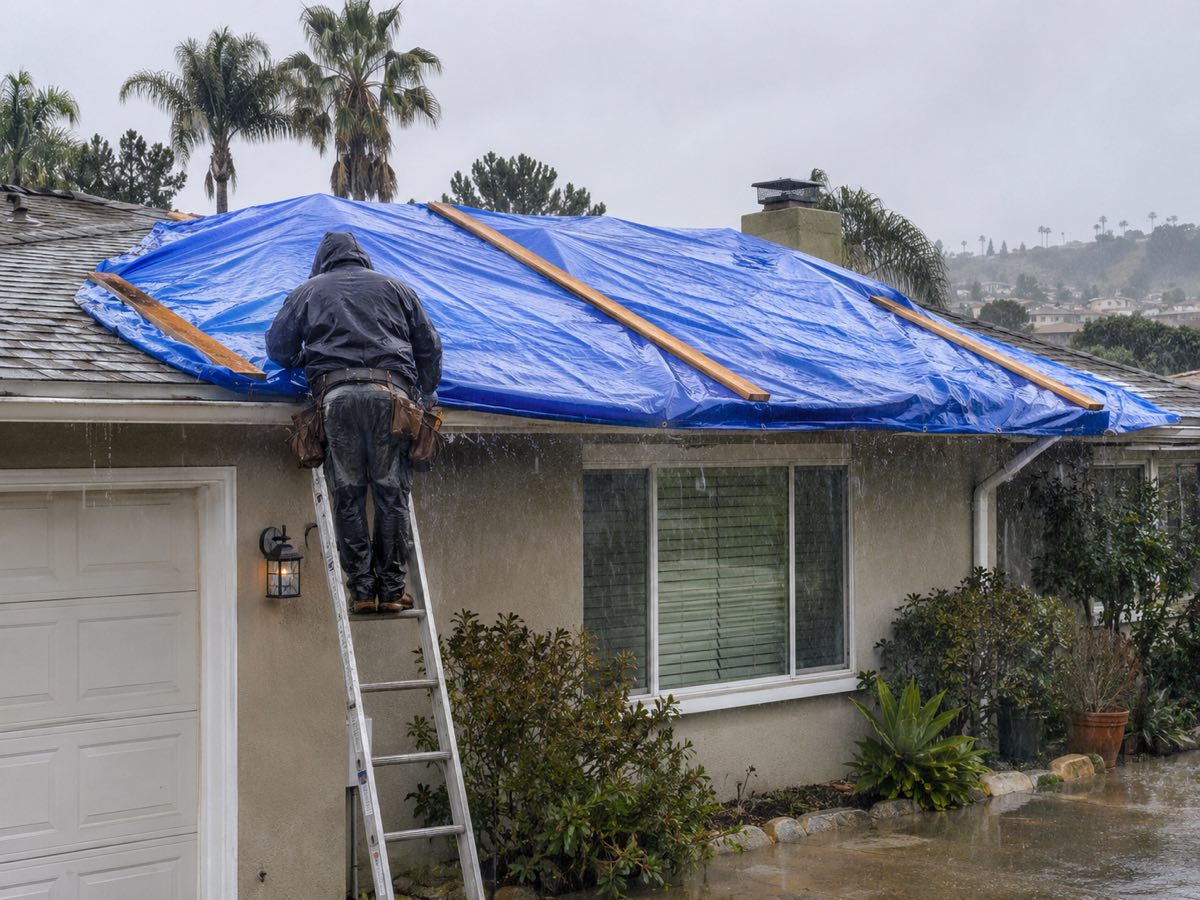
- Stop the water. We tarp the area, seal the opening temporarily, or reset displaced tiles.
- Photograph the damage. You get photos for your records and for any insurance claim.
- Schedule the permanent repair. Once the roof is dry, we come back and fix the cause properly.
What to do while you wait
- Turn off power to any room where water is near lights or outlets.
- Move valuables and electronics out of the way.
- Catch water in buckets and lay towels down.
- Drain a bulging ceiling through a small hole at its lowest point into a bucket.
- Take photos of the damage inside for insurance.
- Stay off the roof. Wet tile and shingles are dangerous.
To understand what went wrong, read why roofs leak: 10 common causes.
Emergency tarping
A roof tarp is a heavy plastic sheet secured over the damaged area. It should extend over the ridge or above the damage so water runs over it, not under it. A badly placed tarp can trap water or blow off in the next gust, so we fasten it to avoid adding new holes to the roof where possible.
Does insurance cover emergency roof repair?
Many homeowners policies expect you to take reasonable steps to prevent more damage after a storm, which includes temporary repairs. Coverage depends on your policy and the cause. Keep receipts and photos, and contact your insurer early.
After the storm: the permanent repair
The temporary fix is not the repair. When the roof is dry, we inspect the area fully and quote the permanent fix. That might be storm damage repair, roof leak repair or tile roof repair.
How much does emergency roof repair cost?
An emergency visit is priced separately from the permanent repair. The cost depends on the size of the area to cover, roof height and pitch, and conditions such as wind and darkness. Tarping a small area costs far less than the permanent fix that follows. We tell you the price of the temporary work before we start. For permanent repair prices, see the San Diego roof repair price guide.
Temporary fixes vs permanent repairs
| Temporary fix | Permanent repair | |
|---|---|---|
| Goal | Stop water now | Fix the cause for good |
| When | During or right after the storm | When the roof is dry and safe |
| Methods | Tarp, temporary sealant, resetting tiles | New flashing, tiles, shingles, underlayment, membrane |
| How long it lasts | Days to weeks | Years |
| Insurance | Often expected, to prevent more damage | Covered or not depending on the cause |
A tarp left on for months breaks down in the sun and can damage the roof under it. Plan the permanent repair as soon as the weather clears.
Common emergency calls in San Diego
- First storm of the season leaks. After a dry summer, small gaps show up all at once in the first heavy rain, usually in December or January.
- Wind damage. Strong winds lift shingles, move tiles and tear off ridge caps and flashing. See wind and storm damage repair.
- Flat roof overflow. A blocked drain or scupper on a flat roof lets water rise above the flashing and pour inside.
- Fallen branches puncturing shingles or breaking tiles.
Do-it-yourself tarping: our advice
We don't recommend getting on a wet roof. Every winter, people are hurt falling from roofs during storms. If you choose to tarp yourself, only do it on a low, single-story roof in calm, dry conditions, with someone holding the ladder. Never stand on wet tile. In most cases, catching water inside and calling a roofer is the safer choice.
Protecting the inside of your home
- Shut off power to rooms where water is near outlets, lights or ceiling fans.
- Move furniture and rugs away from the leak and cover what you can't move with plastic.
- Catch the water in buckets and change them often.
- Relieve a bulging ceiling with a small hole at its lowest point, with a bucket underneath.
- Run fans or a dehumidifier once the leak stops, to dry drywall and insulation.
- Photograph everything before cleaning up, for your insurer.
What to tell us when you call
The more we know, the faster we can help:
- Your address and the best phone number to reach you
- Where the water is coming in and how fast
- Your roof type, if you know it: tile, shingle or flat
- Whether there's water near lights, outlets or the electrical panel
- Whether the ceiling is sagging
- Any visible damage outside, such as missing tiles or a fallen branch
Before the next storm
Most emergency calls we get could have been a small repair in the fall. Before December, clear gutters and valleys, replace cracked tiles and vent boots, and have older roofs checked. A pre-season roof inspection is free and takes under an hour.
More help during a leak
Emergency roof repair questions
Can you fix a roof while it's raining?
A full repair can't be done properly in rain, but a temporary fix can. Tarping and temporary sealing stop water until the roof dries out.
How fast can you come out?
It depends on the storm and the number of calls. Call (619) 555-0100 and we'll give you an honest arrival time.
Should I call my insurance company first?
Call us first to stop the water, then call your insurer. Preventing more damage protects your claim.
What if the leak stops when the rain stops?
Get it inspected anyway. A leak that stops when it's dry will come back with the next storm, and hidden water can rot the roof deck between storms.
Will a tarp damage my roof?
A properly placed tarp shouldn't. Tarps fastened with nails through the roofing can add holes, which is why we secure them in ways that avoid new damage where possible.
Can my homeowners insurance pay for the tarp?
Many policies treat reasonable temporary repairs as part of the claim, but each policy differs. Keep the receipt and photos and send them with your claim.
How do I find the leak if I can't see the ceiling stain spreading?
Look for drips at light fixtures, water along wall corners, and damp spots in closets. In the attic, check the underside of the roof with a flashlight once it's safe.